Walkway construction in Turlock CA - a firm, even path to your front door
Tripping on a cracked, uneven path or crossing mud to your door? We'll help you choose concrete or pavers and build it properly.
Walkway construction starts with the right surface
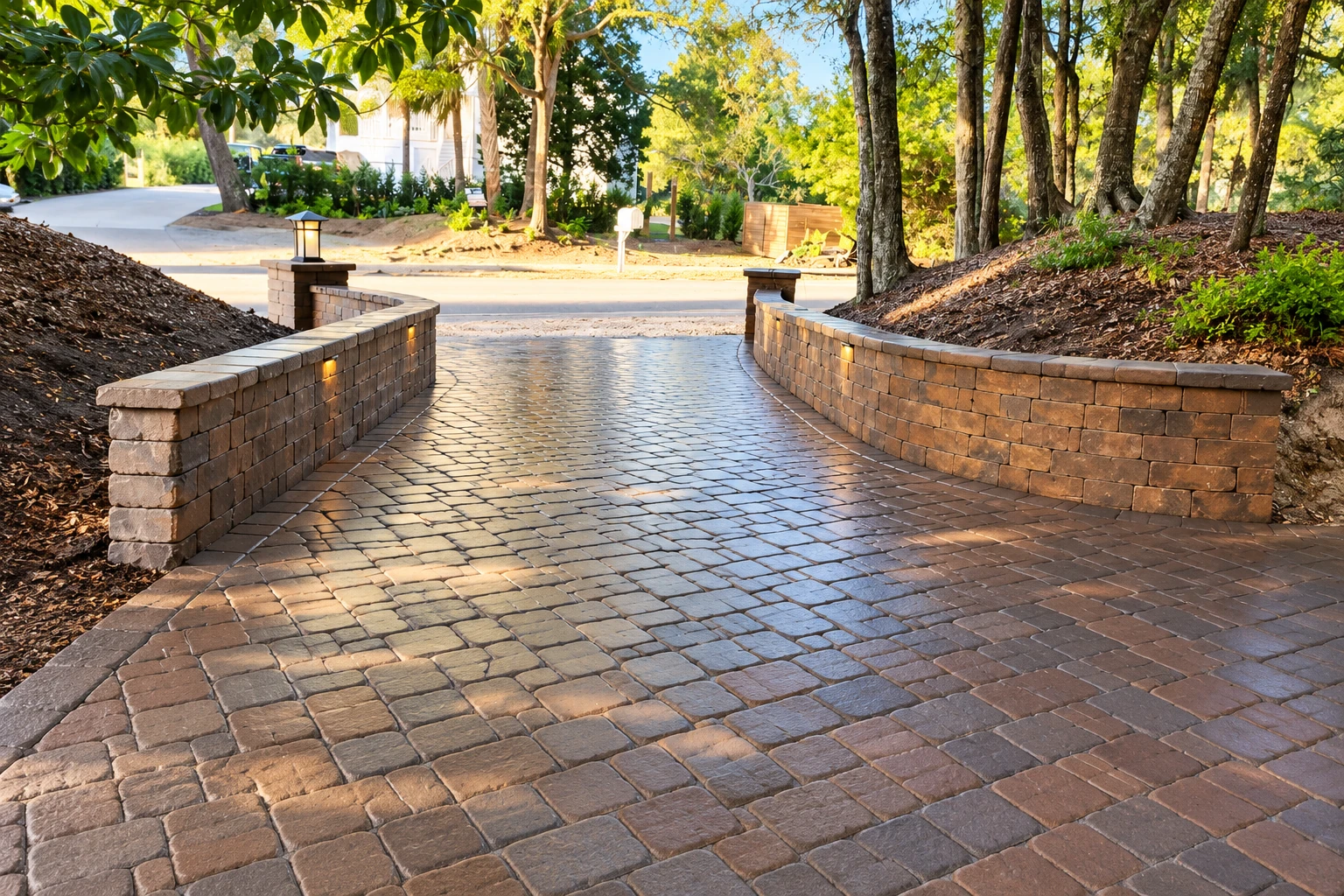
A call about walkway construction in Turlock usually starts with a path that's cracked, sunk at one end or missing, so everyone cuts across the lawn to the door. We build walks in poured concrete or in pavers, which are laid piece by piece, and I'll walk you through how fast each goes in and how soon you can use it.
The price moves with the surface, the size of the path, how much old concrete comes out and how much base work the ground needs. The schedule turns on the surface too, and on whether the job needs a permit. Flatwork like this falls under California's concrete contractor license, and we're licensed and insured. When I write up the estimate, you'll see what I'd do and why.
- A firm, packed base under the whole path
- Water runs off the path, away from the house
- Even joints and edges with no trip lips
- Clean tie-ins at steps, driveway and sidewalk
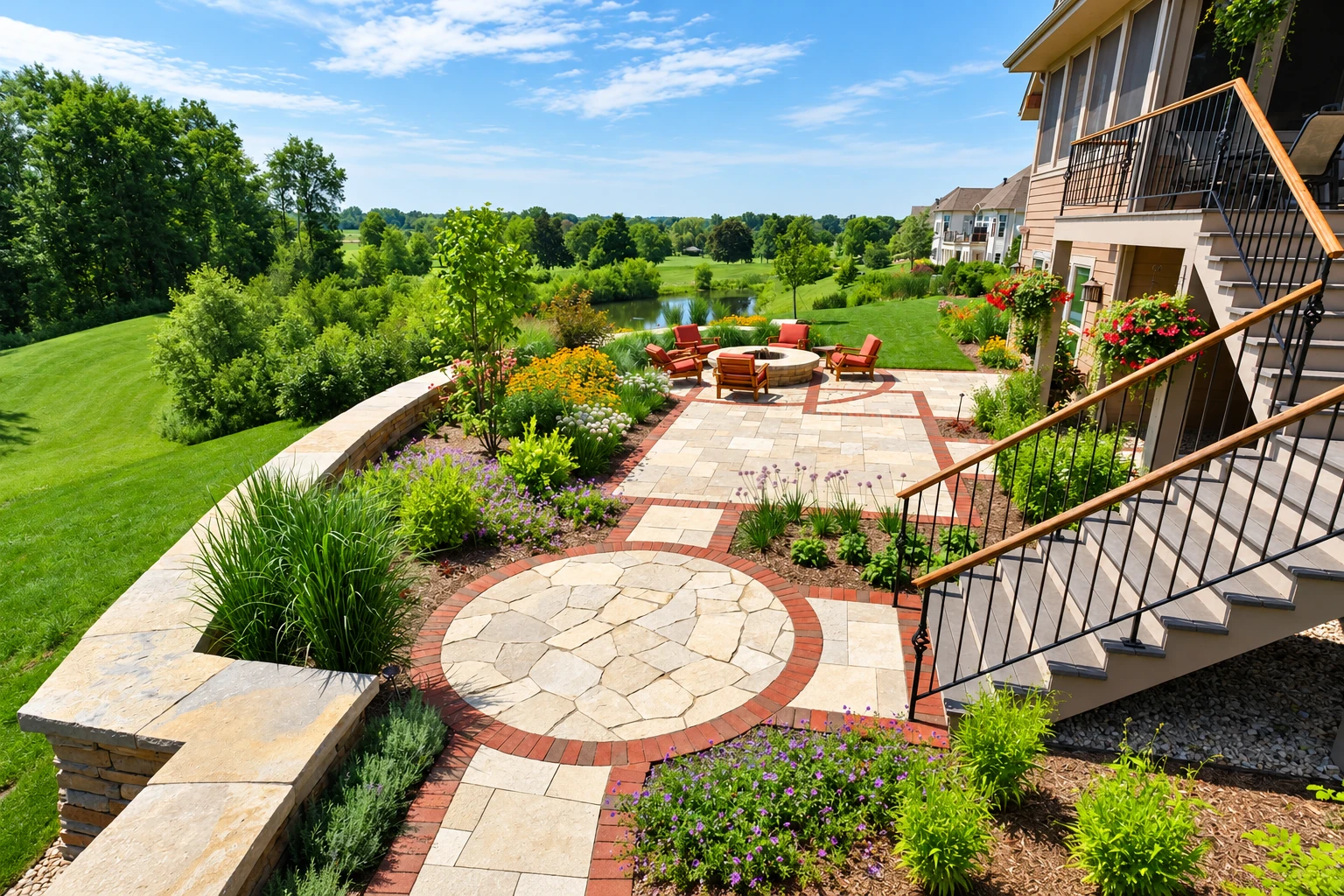
Concrete, pavers or a porous path
The surface decides how long we're in your yard, how soon you can walk on the path and how much care it needs after we leave.
Poured concrete
- When it suits
- You want the path finished in the least time on site.
- The trade-off
- Fewer steps to install, but concrete needs time to cure before heavy use.
Pavers
- When it suits
- You like a laid pattern and want pieces you can lift and reset later.
- The trade-off
- More hand labor, since each piece is set and the joints filled one by one.
Pervious concrete
- When it suits
- You want rain to soak through the path instead of running off it.
- The trade-off
- It has to cure first, then needs regular cleaning so soil doesn't clog it.
How we plan and build your walkway
You reach out
Call or send a request with the path's rough length and where it runs, and we set a time for me to come out.
I walk the path
I come out myself, look at the ground, the slope and where the path meets the house and street, then write up what I'd do.
You pick the surface
You settle on the surface and layout, and if the job needs a permit, we handle the application and paperwork with the city or county office.
We build it
Our crew lead and masons dig out, pack the base, set forms or edging, then pour and finish the concrete or lay the pavers.
Final check
I check the path myself before we call it done, and the crew cleans up the site. Your satisfaction, guaranteed.
What to settle before we dig
These choices set the size of the job and the order of the work, so they're worth thinking through before I write the estimate.
Where the water goes
Where a yard slopes toward the house, we pitch the path away from the foundation so rain runs off instead of pooling against the wall.
Upkeep on a porous path
Guidance from another state says porous paving can work for decades and often outlasts solid paving, but only with a careful install and steady upkeep.
The old path coming out
Breaking out old concrete or cutting roots adds digging and hauling, and I'll only know how deep the base work goes once the old slab is up.
What sits alongside it
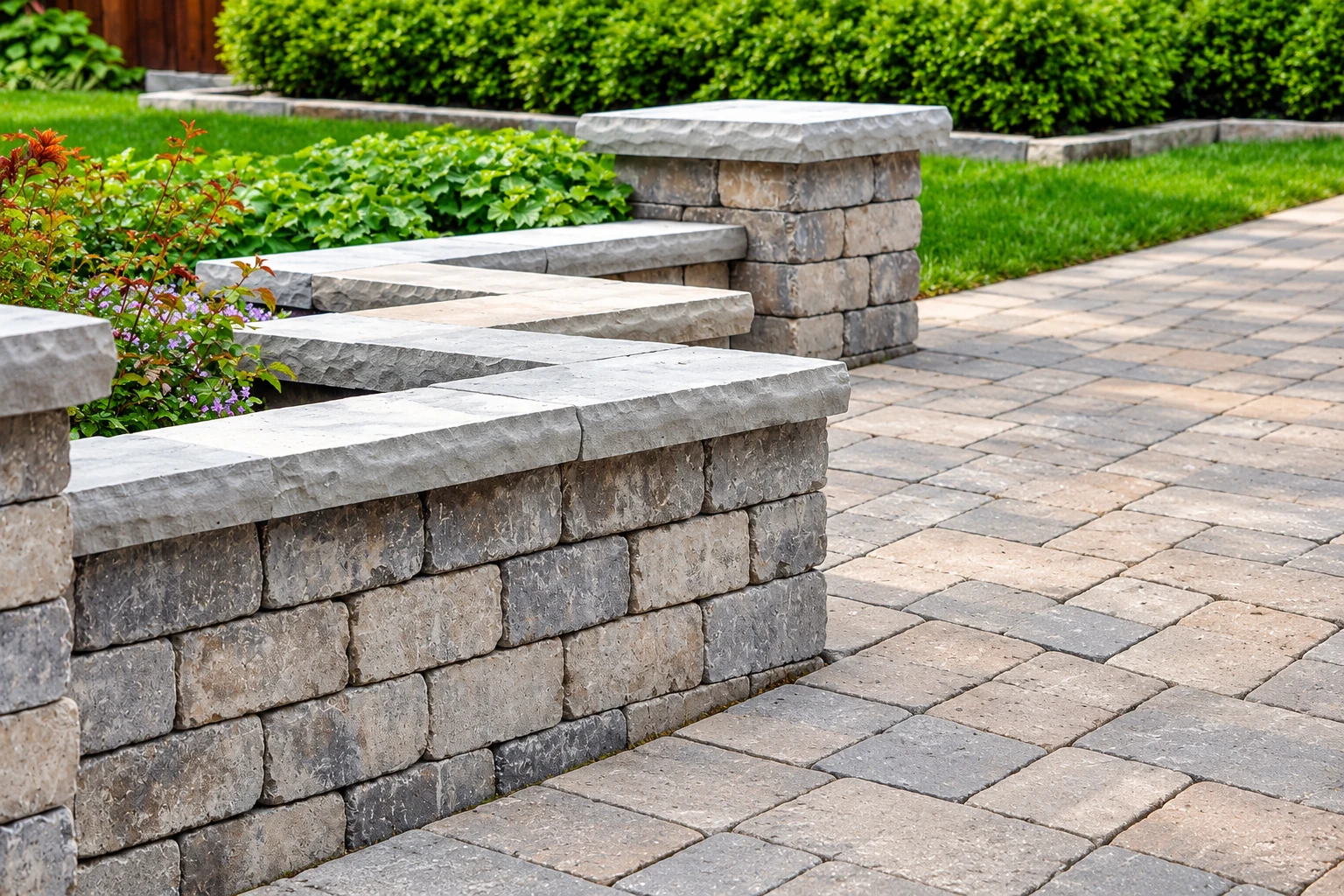
Steps, borders or a low wall are easier to build with the path than after it, so we can do brick wall installation or stone masonry in the same job.
What a well-built walkway looks like
Look at the edges, the joints and where the path meets steps or a driveway. Open any example to see the detail up close.
Tell us about your path
Send your path's rough length, preferred surface and whether it meets the sidewalk. We reply within one business day, and I come out for a free estimate, no obligation.
To talk now, call
(209) 410-9284Questions before you build a walkway
Another question? Call (209) 410-9284
Does a walkway in Turlock need a building permit?
Turlock's building permit exemptions name outside walks and paving up to 30 inches above grade, as long as there's no roof framing and nothing over a basement or story below. Path lights or a drain can still need their own electrical or plumbing permit. When your job needs a permit, we handle the application and paperwork.
Who handles the part of my path that meets the city sidewalk in Turlock?
In Turlock, you're responsible for the sidewalk along your street frontage, and an unsafe one calls for an encroachment permit and repairs. Any work on the city land along the street may need that permit too. If your path runs to the sidewalk, we'll point you to the city's Engineering Division, which answers questions on getting one.
Which walkway surface can I walk on soonest, concrete or pavers?
Open-jointed pavers are ready to use as soon as they're installed, while pervious concrete, a mix that lets water through, needs time to cure first. Poured concrete goes in faster than pavers because there's nothing to lay piece by piece, so quick install and quick use point different ways. I'll help you decide which matters more.
How do I keep a porous walkway from clogging?
Keep soil off it, because dirt left in the pores is what clogs it. One guide written for another state advises cleaning any soil off pervious paving right away and vacuuming it as needed twice a year. If that upkeep doesn't suit you, a solid surface is the better pick.
Can a handyman build my walkway without a license in California?
Only on a small job, since the state's minor work exemption covers work up to $1,000, and only when the job needs no permit and the person employs no one. Ask any unlicensed helper whether your job meets both of those terms. If it doesn't, you need a licensed contractor.